Mixture interpretation and probabilistic genotyping in DNA, the pattern disciplines and what the national reviews said about them, breath and blood testing and the maintenance records behind a result, digital forensics and the extraction report, the admissibility standard and the hearing that applies it, laboratory accreditation and error rates, and the defense expert.
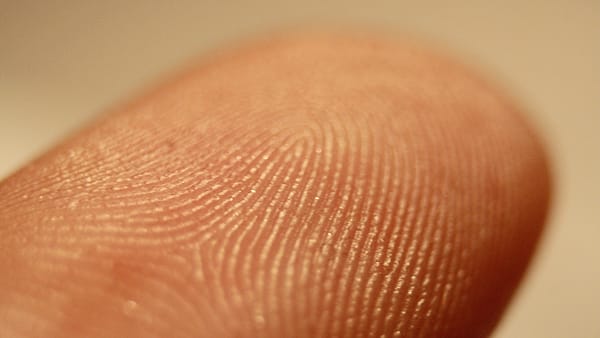
A latent print comparison runs through analysis, comparison, evaluation and verification. Sufficiency at the analysis stage is the examiner's judgment and is not fixed by any national minimum point count. An automated search returns ranked candidates rather than conclusions. Verification may or may not be blind. Black box testing measures the accuracy of conclusions without examining how they were reached, and a reported error rate describes study participants, not a single comparison.
Section 3006A(e) authorizes investigative, expert and other services necessary for adequate representation where the person is financially unable to obtain them. The application may be made ex parte and heard ex parte, so the request does not disclose the theory of the defense. Compensation is capped at an amount the court may exceed on certification approved by the chief judge of the circuit. Rule 706 supplies a court-appointed route, and Rule 16 governs disclosure once the expert testifies.
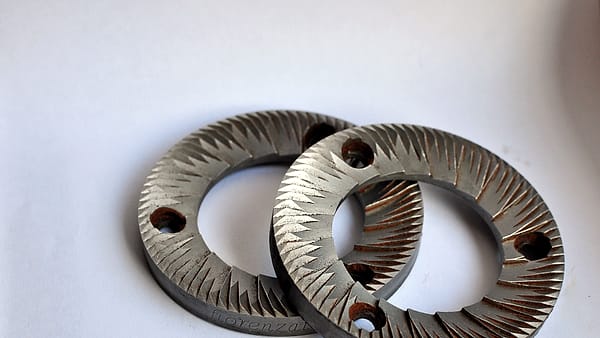
Firearms examination compares class, subclass and individual characteristics on fired components under a comparison microscope. The identification threshold is agreement judged sufficient by the examiner, not a fixed count of matching striae. Subclass carryover from consecutively produced tooling can imitate individual agreement. Correlation databases return ranked candidates, and conclusion wording has moved away from claims of identification to the exclusion of every other firearm.
A short tandem repeat profile is read from an electropherogram, compared against a reference, and reported with a statistic. A random match probability estimates how often the profile would appear among unrelated people, by multiplying allele frequencies across loci under independence assumptions and a subpopulation correction. A likelihood ratio instead compares two stated propositions. Y-chromosome and mitochondrial results are lineage markers estimated by counting.
Accreditation is an assessment of a management system and a defined scope of testing against an international standard. The certificate names the disciplines and methods covered, so work outside that list is unaccredited work. Assessments are periodic and sample case files rather than reading all of them, and declared proficiency tests are easier than casework. Federal law conditions the national DNA index and certain grants on accreditation and external audits. It certifies no conclusion.
Probabilistic genotyping weighs the genotype combinations consistent with an observed DNA profile and reports a likelihood ratio comparing two propositions. Semi-continuous models use the presence or absence of variants; fully continuous models also use peak heights. Developmental validation is performed by the developer, internal validation by the laboratory that runs it. Access disputes concern source code and the case run record, and the two are separate requests.
A device examination proceeds in stages: the device is acquired at one of several levels, the acquisition is hashed so a working copy can be verified, and analysis software parses the resulting data into readable messages, contacts and locations. The report a reader sees is the output of that parsing, not the raw acquisition. Deleted content is recovered from unallocated space and from records marked free, often without the metadata that would place it in time.
A profile is a mixture when the peaks at one or more loci cannot come from a single person. Interpretation begins by assigning a number of contributors, an assignment that is uncertain and that constrains every later step. Low template amounts produce dropout, drop-in, stutter and unbalanced peaks, which is why analytical and stochastic thresholds exist. Inclusion statistics discard information, and the NIST foundation review presses laboratories to work inside a validated range.
A breath testing instrument measures alcohol in a sample of deep lung air and converts it to a blood-equivalent figure using an assumed partition ratio. The result depends on the instrument conforming to published model specifications, on an internal air blank and control check accompanying each subject test, on a documented calibration history, and on an observation period intended to exclude alcohol originating in the mouth rather than the lungs. Each of those conditions leaves a record.
Federal Rule of Evidence 702 admits forensic opinion only where the proponent demonstrates to the court, more likely than not, that the knowledge will help the fact-finder, that the opinion rests on sufficient facts or data, that it is the product of reliable principles and methods, and that it reflects a reliable application of those methods to the facts. The factors are flexible, general acceptance alone is not enough, and the record comes from validation studies and the case file.
Touch samples contain very little material, and modern chemistry can type it. People shed at markedly different rates, DNA moves between hands, objects and surfaces without direct contact, and frequently handled items carry background from many people. Contamination can also enter at collection, packaging or in the laboratory. A sub-source statistic addresses whose DNA is present and supplies no information about the activity that placed it there.