Firearms and Toolmark Identification
An examiner compares microscopic marks left by manufacture, wear and use, then decides whether the agreement is sufficient. The threshold rests on training and experience rather than a counted number, which is the point at which the discipline has drawn the most criticism.
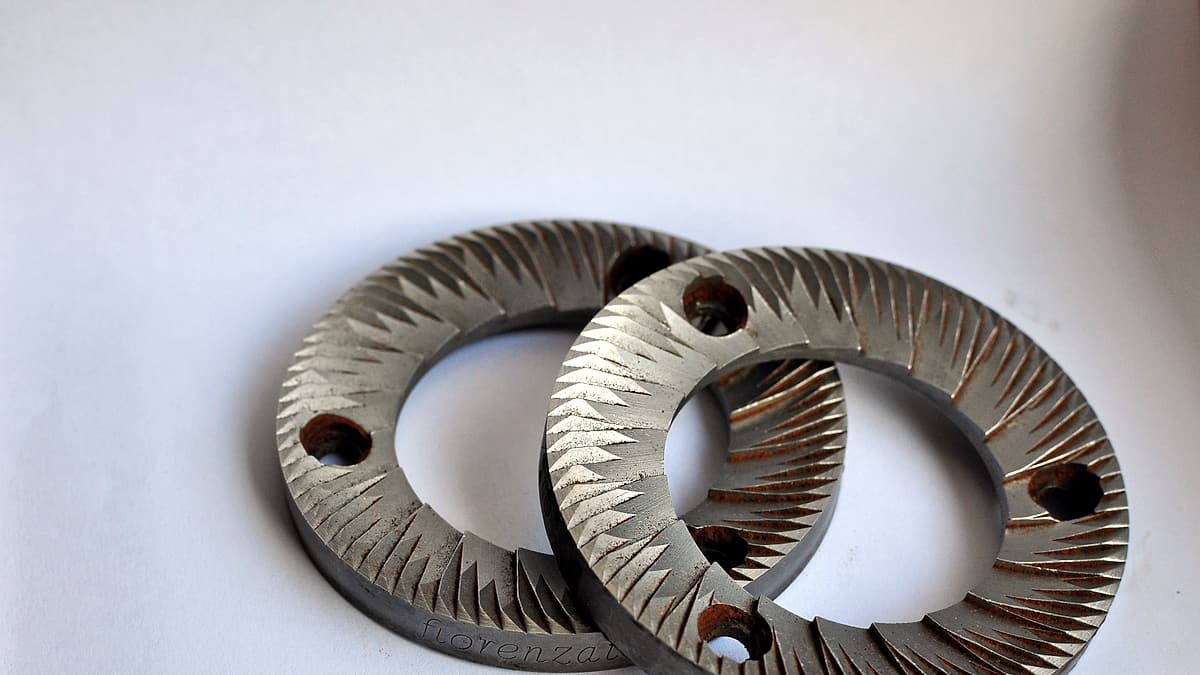
The rule in short
Firearms examination compares class, subclass and individual characteristics on fired components under a comparison microscope. The identification threshold is agreement judged sufficient by the examiner, not a fixed count of matching striae. Subclass carryover from consecutively produced tooling can imitate individual agreement. Correlation databases return ranked candidates, and conclusion wording has moved away from claims of identification to the exclusion of every other firearm.
Firearms examination rests on a physical claim that is easy to state and hard to bound: metal working against metal transfers microscopic marks, and the marks a particular firearm leaves are said to differ from those left by any other. Everything contested in the discipline concerns the second half of that sentence — how much agreement is enough, what can imitate agreement, and what an examiner is entitled to say once the agreement is found.
Three kinds of marks and where each comes from
Class characteristics are determined before a component is made. Caliber, the number of lands and grooves in a barrel, the width and direction of the rifling twist, the shape of a firing pin and the type of breech face finish are all design features shared by every item made to that specification. Class characteristics exclude efficiently. A bullet bearing six land impressions with a right twist did not come from a barrel cut the other way.
Individual characteristics are the microscopic irregularities left by imperfect manufacture, by wear, and by damage acquired in use. They are the features an identification rests on, on the premise that the accidental detail on any one working surface differs from that on every other. Subclass characteristics sit awkwardly between the two. They arise from the condition of the tool that shaped the surface, and they are shared by a subset of items — everything produced while the tool was in that condition.
Subclass carryover is the hardest case in the discipline, and it is hardest precisely where the components were produced one after another. A broach or a die wears progressively, so consecutively manufactured barrels or breech faces can carry common detail that did not originate in random imperfection at all. Distinguishing subclass from individual detail depends on knowing how the surface was made and on examining known non-matching test fires from the same production run.
The surfaces an examiner actually compares
A fired cartridge case records the chamber and the breech end of the action. The breech face impression is the flattened area struck when the case is driven rearward, and it carries the finish marks of that surface. The firing pin impression records the tip that struck the primer, including any drag as the case moved. Extractor and ejector marks record the parts that pulled the case from the chamber and threw it clear, and chamber marks record the walls the case expanded against.
A fired bullet records the barrel. Lands and grooves leave impressions whose number, width and twist are class features, and within those impressions run striations produced by the fine irregularities of the bore. Striations are the individual detail on a bullet, and they are also the detail most easily destroyed. A bullet that struck bone, masonry or a hard surface may retain enough class information to be useful and no comparable individual detail at all.
| Mark | Surface that produces it | What limits its usefulness |
|---|---|---|
| Breech face impression | The standing breech the case is driven against on firing | Soft primer metal, light loads, and finishes that leave broad shared texture |
| Firing pin impression | The tip that strikes the primer, with any drag on movement | Small area; shape is often a class feature shared across a model line |
| Extractor and ejector marks | The parts that withdraw the case and expel it from the action | Present only on cases cycled through the action, and easily overwritten |
| Chamber marks | The chamber walls the case expands against under pressure | Variable with pressure and case material; often faint |
| Land and groove impressions | The rifling that engraves the bullet as it travels the bore | Class information only; identifies a category of barrel, not one barrel |
| Striations within those impressions | Fine irregularities in the bore surface | Destroyed by deformation on impact and altered as the barrel wears |
Sufficient agreement and who decides it
The comparison is made on a comparison microscope, which places two specimens under separate objectives and joins the fields so that a single image shows both surfaces meeting at a line. The examiner rotates and translates the specimens until striations or impressed detail align across that line, then judges the extent and quality of the correspondence. Test fires from the questioned firearm supply the known side, and several are usually produced to show how much the marks vary between shots.
The threshold applied is described in the discipline's own literature as sufficient agreement: correspondence exceeding the best agreement the examiner has observed between marks known to come from different sources, assessed against training and experience. That formulation is honest about what it is, and it is also the source of the principal criticism. It does not specify a count, a proportion or a statistic, so two examiners applying it are not applying an identical rule.
A mistaken identification in this discipline usually does not come from careless looking. It comes from subclass detail shared across a production run being read as individual detail. The examination notes should record what is known about how the surface was manufactured, and whether known non-matching test fires from comparable items were examined. Where neither appears, the reason the agreement was treated as individual is not documented anywhere.
Correlation databases and the push toward measurement
Imaging systems capture digital images of fired cartridge cases and bullets and correlate them against stored images from other cases, returning a ranked candidate list. The correlation is an image comparison performed by software. It generates investigative leads and links between incidents, and it produces no conclusion about source. Only a microscopic examination of the physical components can do that, and a file describing a correlation result as a match has skipped the step that matters.
NIST has worked on replacing the visual judgment with a measurement. Three-dimensional topography captures the height of a surface rather than a photograph of it, which removes the dependence on lighting and orientation that makes two images of the same surface look different. From topographic data, similarity metrics can be computed and reference artifacts can be used to check that instruments agree. The aim is a statistical statement of evidentiary strength resembling the way a DNA match is expressed numerically.
That work is not finished, and objective measures are not yet what most casework relies on. NIST's scientific foundation reviews evaluate the empirical basis of forensic methods one discipline at a time, with firearm examination among them, and the Organization of Scientific Area Committees drafts the documentary standards a laboratory may adopt. Adoption is voluntary unless accreditation or a jurisdiction's rules make it otherwise.
Conclusion language and the file underneath it
The traditional wording was identification to the exclusion of all other firearms. The National Academies report on strengthening forensic science rejected that formulation, observing that the pattern disciplines had not been rigorously shown to support a claim of a single source and that they operated without enforceable standards across laboratories. The criticism was aimed at the claim, not at the practice of comparison, and the response has been to bound the wording rather than abandon the examination.
Bounded language states the conclusion as a source identification supported by agreement of individual characteristics, with an express acknowledgment that the method cannot exclude every other firearm in existence and that the conclusion reflects the examiner's judgment. Some laboratories go further and report the strength of the correspondence on a graded scale rather than collapsing it into a single word.
An NIJ-funded study using consecutively manufactured barrels reported examiners correctly associating bullets with the source firearm 98.8 percent of the time, an error rate below 1.2 percent, with experience level not significantly affecting accuracy. That result comes from a set-piece study on the hardest manufacturing condition. It does not establish an error rate for degraded casework specimens, for other firearm types, or for any individual examiner, and the same limitation applies to the black box work discussed in latent print comparison and the ACE-V method.
The material that makes a conclusion reviewable is the bench file rather than the report. It should contain the examiner's notes on class characteristics observed, a record of the test fires produced and how many, photographs of the aligned comparison at the magnification used, the reasoning for treating detail as individual, and the verification record naming the second examiner and describing what that examiner was given. What a proponent has to establish about the method itself is treated in the reliability showing for a forensic method, and the laboratory's own audit obligations in crime laboratory accreditation.
Points to carry away
- Class characteristics are set by design, subclass characteristics by the tooling used, and individual characteristics by random imperfection and wear.
- Cartridge cases carry breech face, firing pin, extractor, ejector and chamber marks; bullets carry land and groove impressions and striations.
- The sufficient-agreement standard rests on the examiner's training and experience and is not defined by a counted threshold.
- A correlation database returns ranked candidates that must be confirmed by microscopic comparison before any conclusion is reached.
- NIST work on three-dimensional toolmark topography aims at objective similarity measures and statistical statements of evidentiary strength.
- An NIJ-funded study using consecutively manufactured barrels reported a high rate of correct association without validating every casework condition.
Questions readers ask
Why are consecutively manufactured tools treated as the difficult test?
Because tooling wears as it works. A broach, reamer or die that cuts one component then cuts the next carries its own condition into both, so items produced one after another can share marks that arose from the process rather than from random imperfection. Those shared marks are subclass characteristics, and they can imitate the agreement an examiner would otherwise attribute to a single source. Studies built on consecutively produced components are therefore treated as a stress test: they present the conditions under which a false association is most likely to occur.
What is the difference between a database hit and an identification?
A correlation system acquires images of fired components, compares them against stored images, and returns a ranked list of possible matches. The ranking is produced by software operating on image similarity. It establishes nothing about source. An examiner must then obtain the actual components and compare them microscopically before any conclusion exists. Investigative language often blurs this, describing a database result as a hit or a link. The case file should distinguish the correlation result, which is a lead, from the examination that followed it, which is the only thing capable of supporting a conclusion.
Can an examiner determine that a firearm was the source without having the firearm?
No. The comparison requires test fires produced from the questioned firearm under controlled conditions, because the marks being compared are the marks that firearm leaves now. Without it, an examiner can compare recovered components with each other and report whether they appear to share a source, which is a different and narrower conclusion. Examiners can also read class characteristics from a recovered bullet, such as caliber and the number, width and twist direction of land and groove impressions, and use them to include or exclude categories of firearm.
Sources
- National Institute of Justice — The Science Behind Firearm and Tool Mark ExaminationDescribes the marks examiners compare and reports the accuracy figures from the study using consecutively manufactured barrels.
- NIST — Firearms and Toolmarks programWork on three-dimensional toolmark topography, reference artifacts, objective similarity measures and statistical models of evidentiary strength.
- National Academies — Strengthening Forensic Science in the United States: A Path ForwardThe finding that the pattern disciplines lacked enforceable standards and consistent practices across laboratories.
- NIST — Scientific Foundation ReviewsExplains the review process that weighs empirical evidence for a method's reliability, with firearm examination among the reviews in progress.
- NIST — Organization of Scientific Area Committees for Forensic ScienceThe standards registry through which discipline-specific documentary standards for firearms examination are drafted and evaluated.
- Federal Rule of Evidence 702 — Testimony by Expert WitnessesRequires reliable principles and methods and an opinion that reflects a reliable application of them to the facts.
- Federal Rule of Criminal Procedure 16 — Discovery and InspectionReaches results and reports of scientific tests and requires a complete statement of the expert's opinions and their bases and reasons.
Premier Defense Law is a publication, not a law firm. This article states general rules and cites its sources; it is not advice about any particular case, and the law differs by state and changes over time.
More in Forensic Evidence
Fingerprint Comparison and the ACE-V Method
A latent print comparison runs through analysis, comparison, evaluation and verification. Sufficiency at the analysis stage is the examiner's judgment and is not fixed by any national minimum point count. An automated search returns ranked candidates rather than conclusions. Verification may or may not be blind. Black box testing measures the accuracy of conclusions without examining how they were reached, and a reported error rate describes study participants, not a single comparison.

Retaining a Defense Expert and Paying for One
Section 3006A(e) authorizes investigative, expert and other services necessary for adequate representation where the person is financially unable to obtain them. The application may be made ex parte and heard ex parte, so the request does not disclose the theory of the defense. Compensation is capped at an amount the court may exceed on certification approved by the chief judge of the circuit. Rule 706 supplies a court-appointed route, and Rule 16 governs disclosure once the expert testifies.
How a DNA Match Is Expressed and What the Number Means
A short tandem repeat profile is read from an electropherogram, compared against a reference, and reported with a statistic. A random match probability estimates how often the profile would appear among unrelated people, by multiplying allele frequencies across loci under independence assumptions and a subpopulation correction. A likelihood ratio instead compares two stated propositions. Y-chromosome and mitochondrial results are lineage markers estimated by counting.