What makes a stop lawful and how long it may last, the difference between reasonable suspicion and probable cause, searching a vehicle and its containers, consent and who may give it, the warrant requirement and the exceptions courts actually apply, searching a phone, and the remedy when the rule is broken.
A warrantless entry into a home is presumed unreasonable, and exigency is the exception offered when there was no time to apply for a warrant. Courts recognize emergency aid, pursuit of a fleeing suspect, imminent destruction of evidence and prevention of escape. Each is judged on the totality of the circumstances, officers may not manufacture the urgency by threatening unlawful action, and a warrant available by reliable electronic means narrows the claim that there was no time.
An investigative stop is a seizure, and a seizure requires reasonable suspicion: specific and articulable facts, together with rational inferences from them, that criminal activity may be afoot. The showing is judged on the totality of the circumstances rather than fact by fact, so conduct that is innocent standing alone may combine into suspicion. A bare hunch, presence in a particular neighborhood, and a generalized profile do not supply it.
An inventory is an administrative caretaking measure that requires neither a warrant nor probable cause. In exchange, it must be conducted according to standardized criteria that limit officer discretion, including criteria governing whether closed containers are opened. The decision to impound the vehicle must itself rest on standardized policy. A search carried out for investigative purposes, or one that departs from the policy in the record, is not an inventory.
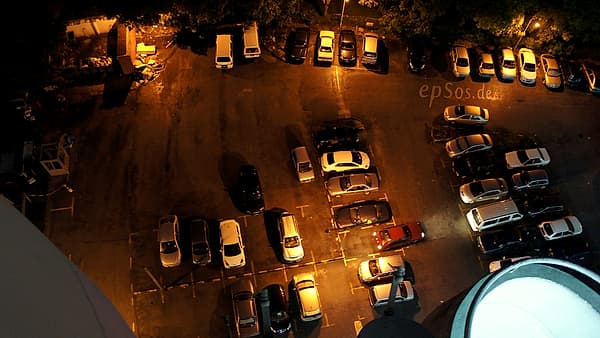
Under the automobile exception, officers may search a readily mobile vehicle without a warrant whenever they have probable cause to believe it holds evidence or contraband. Probable cause both authorizes the search and fixes its scope: officers may look anywhere in the vehicle, including a locked trunk and containers belonging to a passenger, in which the object sought could be concealed. Probable cause attaching to one container does not open the rest of the car.
Reasonable suspicion and probable cause are both practical, non-technical standards resting on the totality of the circumstances, and both sit below certainty and below a preponderance of the evidence. Reasonable suspicion supports a brief investigative detention and, on a further showing, a protective frisk. Probable cause supports an arrest, the issuance of a warrant, and a warrantless search of a vehicle. Neither standard has a numeric threshold, and courts have refused to supply one.
A traffic stop is a seizure justified by a suspected violation, and its permissible duration is set by the tasks tied to that violation: addressing the infraction, checking the license and registration, confirming insurance, and running outstanding warrants. Officers may ask unrelated questions and take safety precautions, but nothing outside the mission may extend it. Once the tasks are complete or reasonably should have been, continued detention requires fresh suspicion or consent.
A search warrant issues on a sworn affidavit establishing probable cause to believe that particular items connected to an offense will be found in a particular place. The affidavit must supply a nexus between the items and the premises, must rest on information that has not gone stale, and must be presented to a neutral and detached magistrate. Review is confined to the four corners of the affidavit together with any sworn oral supplement recorded by the judge.
In federal court a motion to suppress must be raised before trial under Rule 12(b)(3)(C), on a deadline set at or after arraignment, with an untimely motion considered only for good cause. The papers must allege definite, specific and non-conjectural facts, usually by affidavit, and a hearing follows only where a contested issue of material fact is raised. The burden shifts with the theory, and the remedy is bounded by independent source, inevitable discovery, attenuation and good faith.
An arresting officer may take a phone and hold it, but the data it carries may not be searched without a warrant. The quantity and character of that data defeat the officer-safety and evidence-destruction rationales that support a search incident to arrest. Remote wiping and encryption are answered by seizing, isolating or powering down the device rather than by reading it. Data held by a provider follows a separate statutory route, and location records raise questions of their own.
A frisk is a protective measure, not an evidentiary search. It requires reasonable suspicion, separate from the basis for the stop, that the detained person is armed and presently dangerous. It is limited to a pat-down of outer clothing and to areas that could hold a weapon. An object may be seized only if its incriminating character is immediately apparent from that permitted contact; manipulating an object to identify it converts the frisk into a search.
Consent is valid when it is voluntary, judged on the totality of the circumstances, and the government carries the burden of proving it. No warning of a right to refuse is required, though the absence of one is a factor. A person with common authority over a space may consent for a co-occupant, and an officer's reasonable belief in such authority suffices even when the belief is wrong. A physically present occupant who objects defeats consent as to that occupant.
An investigative detention is measured by its purpose, not by a stopwatch. It may last as long as is reasonably necessary to confirm or dispel the suspicion that justified it, provided the officer pursues that inquiry diligently and does not use means more intrusive than the situation requires. When the detention outgrows its purpose, or when its conditions match the hallmarks of custody, it becomes an arrest and probable cause is required.