The Extraction Report and How It Is Produced
The tidy document produced at the end of a device examination is not the evidence. It is a rendering of an underlying acquisition, assembled by software that parses databases and containers, and its readability conceals a series of decisions.
The rule in short
A device examination proceeds in stages: the device is acquired at one of several levels, the acquisition is hashed so a working copy can be verified, and analysis software parses the resulting data into readable messages, contacts and locations. The report a reader sees is the output of that parsing, not the raw acquisition. Deleted content is recovered from unallocated space and from records marked free, often without the metadata that would place it in time.
An extraction report arrives as an orderly document: threads of messages in sequence, a contact list, a table of locations, a gallery of images. That presentation is the last step of a long process, and almost none of the work that produced it is visible on the page. Understanding what the report can support means working backward through the acquisition that produced the data, the software that interpreted it, and the choices made at each stage.
What the acquisition captured
Examinations are described by acquisition level, and the levels differ in what they reach. Manual examination means an examiner operating the device and photographing what appears on the screen; it captures the presentation and nothing beneath it. A logical extraction requests data through the device's own interfaces and returns what those interfaces expose, which is typically the active content of supported applications. A file system extraction returns the files and directory structures as the device organizes them, including application databases in their native form.
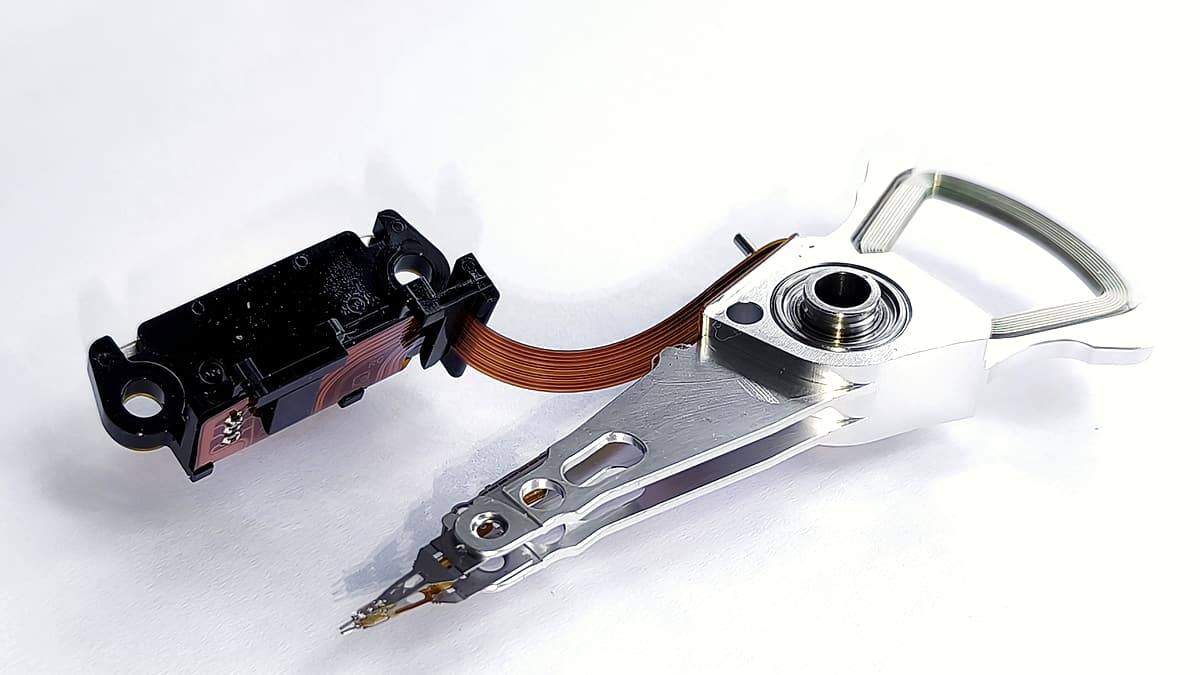
A physical acquisition reads the storage medium itself, producing an image that includes areas the file system no longer references. Beyond that sit invasive hardware methods, used when a device will not start or will not cooperate: connecting to test points on the board to read memory directly, or removing the memory component and reading it in a separate reader. Those methods recover data that other levels cannot, at the cost of reconstructing the organizing structures from raw memory afterward.
| Acquisition level | What it captures | What it leaves out |
|---|---|---|
| Manual examination | What the device displays on screen, recorded as images | Everything not rendered by the interface, including underlying records |
| Logical extraction | Active data exposed through the device's own interfaces | Unsupported applications, and data the interface does not surface |
| File system extraction | Files and directories as organized by the device, including application databases | Content in space the file system no longer references |
| Physical image | The storage medium as a whole, including unreferenced areas | Data protected by encryption the examiner cannot resolve |
| Invasive hardware methods | Memory read directly from the board or the removed component | Organizing structures that must then be reconstructed by inference |
Working on a copy, and proving it is one
Guidance from the federal side is consistent on one point: digital evidence is fragile, and examination is best conducted on a copy rather than on the original. The copy is made under conditions that prevent writing back to the source, whether by a hardware write-blocker or by an equivalent software control, and a hash value is computed across the acquired data. Recomputing that value later shows the working copy still matches what was collected.
Verification of this kind is narrow and worth keeping in proportion. It establishes that nothing changed after acquisition. It says nothing about whether the acquisition reached everything present, whether the correct device was imaged, or whether the later interpretation was sound. Tool testing addresses a different part of the problem by measuring whether imaging, write-blocking, file carving and recovery tools do what they claim across defined test sets, which is the sort of empirical grounding a court asks about when the reliability of a method is contested.
Analysis software reads application databases and container formats and assembles them into readable threads. When an application changes its storage format, or uses a structure the tool does not fully model, the failure is usually silent. Messages appear under the wrong participant, an attachment is separated from the message it belonged to, entries duplicate, or content simply does not appear. Nothing on the page announces this. The only way to test a report is against the underlying extraction, which is why the extraction file — rather than the polished document generated from it — is the artifact that matters.
Documentation of the examination itself sits alongside the technical artifacts. Federal guidance describes the sequence as assessment, acquisition, examination, and documenting and reporting, and treats contemporaneous recording of actions and observations as part of the method rather than as administrative overhead. What that produces is a set of notes stating which tool and version were used, which acquisition level succeeded and which failed, what settings were applied, and what the examiner did between the device arriving and the report being generated. Where those notes are thin, the steps between acquisition and conclusion cannot be reconstructed by anyone else.
Recovered material and what it carries with it
Deletion on a modern device usually removes a reference rather than the content. Two recovery routes follow from that. Data in unallocated space can be identified by its internal structure and carved out, and records inside application databases that are marked free frequently persist until the database reorganizes itself. Both routes return content, and both tend to return it stripped of context.
That missing context is the central limitation. A carved fragment may be a complete image or a partial one, and the file system entry that would have recorded when it was written and where it came from is often gone. A recovered database row may hold message text without a reliable link to a conversation or a sender. Attribution of recovered material to a person, an application or a moment is an inference, and it is frequently a weaker inference than the same content would support if it were still active on the device.
Time stamps and content that is not on the device
Times shown in a report come from device and application clocks and are rendered through a configured time zone. A device whose clock drifted, whose zone was changed, or whose applications record in coordinated universal time while the report displays local time will produce entries that are internally consistent and externally wrong. Different applications also record different events under the same label, so a value described as a message time may mark composition, transmission or receipt depending on the source.
The other boundary is remote storage. Much of what a handset displays lives with a service provider, synchronized rather than resident. Content visible on a screen may not appear in an extraction at all, and content in an extraction may be a cached fragment of a larger record held elsewhere. Reaching the provider's copy runs through a separate statutory route requiring a warrant for the contents of communications, or a court order supported by specific and articulable facts for other records. That route governs whatever a warrant authorizing a device search does not reach.
Testing any of this requires the extraction itself, the tool version and settings used, and the examiner's notes. The gap between a generated document and the material that produced it is not peculiar to digital work; the same structure appears in the records standing behind a breath alcohol reading. The quality system standing behind the examining unit is the subject of accreditation and its stated scope, which in digital units often covers some methods and not others.
Points to carry away
- Acquisition levels range from manual review of the screen through logical and file system extraction to a physical image and invasive hardware methods.
- Examination is conducted on a copy, and a hash value computed at acquisition is what makes the working copy verifiable against the original.
- The readable report is produced by software that parses application databases, so a parsing failure appears as missing, duplicated or misattributed content rather than as an error message.
- Deleted material recovered from unallocated space or from database records marked free frequently arrives without the metadata needed to attribute or date it.
- Timestamps reflect device and application clocks and configured time zones, and content displayed on a device may be stored with a service provider rather than on the device itself.
Questions readers ask
Why does an examiner produce a hash value at acquisition?
A hash is a fixed-length value computed from the contents of a file or image, and any change to the data produces a different value. Computing one at acquisition and again later shows whether the working copy still matches what was collected. It establishes internal consistency, not accuracy: a hash proves nothing about whether the acquisition captured everything present on the device, whether the parsing was correct, or whether the device held what someone assumed it held. It answers one narrow question, and answers it well.
Can a locked or damaged handset still be acquired?
Sometimes, and the methods available depend heavily on the model and its security design. Invasive approaches read memory directly rather than through the operating system, either by connecting to test points on the circuit board or by removing the memory chip and reading it in a separate reader. Both can retrieve data from a device that will not start normally. Both also require reconstructing the file system from raw memory, which is where interpretation errors tend to enter, since the structures that normally organize the data may be partly unavailable.
Does an examiner review every item a device contains?
Rarely, and the report usually says so. A modern handset holds far more data than any examination reviews, so examiners apply filters: date ranges, keyword lists, particular applications, particular contacts. Those choices shape what appears in the report and what does not. They are legitimate and often necessary, but they are decisions rather than results, and they belong in the documentation. A report that presents a filtered subset without describing the filter invites a reader to treat absence of content as evidence that none existed.
Sources
- NIST Special Publication 800-101 Revision 1, Guidelines on Mobile Device ForensicsDefines mobile device forensics as recovering digital evidence under forensically sound conditions and covers validation, preservation, acquisition, examination, analysis and reporting.
- Computer Forensics Tool Testing Program (NIST)Develops tool specifications, test procedures and criteria for imaging, write-blocking, deleted-file recovery, file carving and mobile device tools.
- Digital Evidence (NIST)Describes the National Software Reference Library of known-file signatures used to filter known files from seized devices.
- Forensic Examination of Digital Evidence: A Guide for Law Enforcement (National Institute of Justice)Sets out assessment, acquisition, examination and reporting, and states that examination is best conducted on a copy of the original.
- Scientific Foundation Reviews (NIST)Identifies digital evidence as a discipline reviewed for the empirical evidence supporting its methods.
- 18 U.S.C. 2703, Required disclosure of customer communications or records (Cornell LII)Governs the separate route to content and records held by a service provider rather than stored on a device.
Premier Defense Law is a publication, not a law firm. This article states general rules and cites its sources; it is not advice about any particular case, and the law differs by state and changes over time.
More in Forensic Evidence
Fingerprint Comparison and the ACE-V Method
A latent print comparison runs through analysis, comparison, evaluation and verification. Sufficiency at the analysis stage is the examiner's judgment and is not fixed by any national minimum point count. An automated search returns ranked candidates rather than conclusions. Verification may or may not be blind. Black box testing measures the accuracy of conclusions without examining how they were reached, and a reported error rate describes study participants, not a single comparison.

Retaining a Defense Expert and Paying for One
Section 3006A(e) authorizes investigative, expert and other services necessary for adequate representation where the person is financially unable to obtain them. The application may be made ex parte and heard ex parte, so the request does not disclose the theory of the defense. Compensation is capped at an amount the court may exceed on certification approved by the chief judge of the circuit. Rule 706 supplies a court-appointed route, and Rule 16 governs disclosure once the expert testifies.

Firearms and Toolmark Identification
Firearms examination compares class, subclass and individual characteristics on fired components under a comparison microscope. The identification threshold is agreement judged sufficient by the examiner, not a fixed count of matching striae. Subclass carryover from consecutively produced tooling can imitate individual agreement. Correlation databases return ranked candidates, and conclusion wording has moved away from claims of identification to the exclusion of every other firearm.