Touch DNA and the Transfer Problem
Current methods generate a profile from the residue of a brief contact. That sensitivity also captures material that arrived by a route no one witnessed, which is why the question of whose DNA is present is answerable long before the question of how it got there.
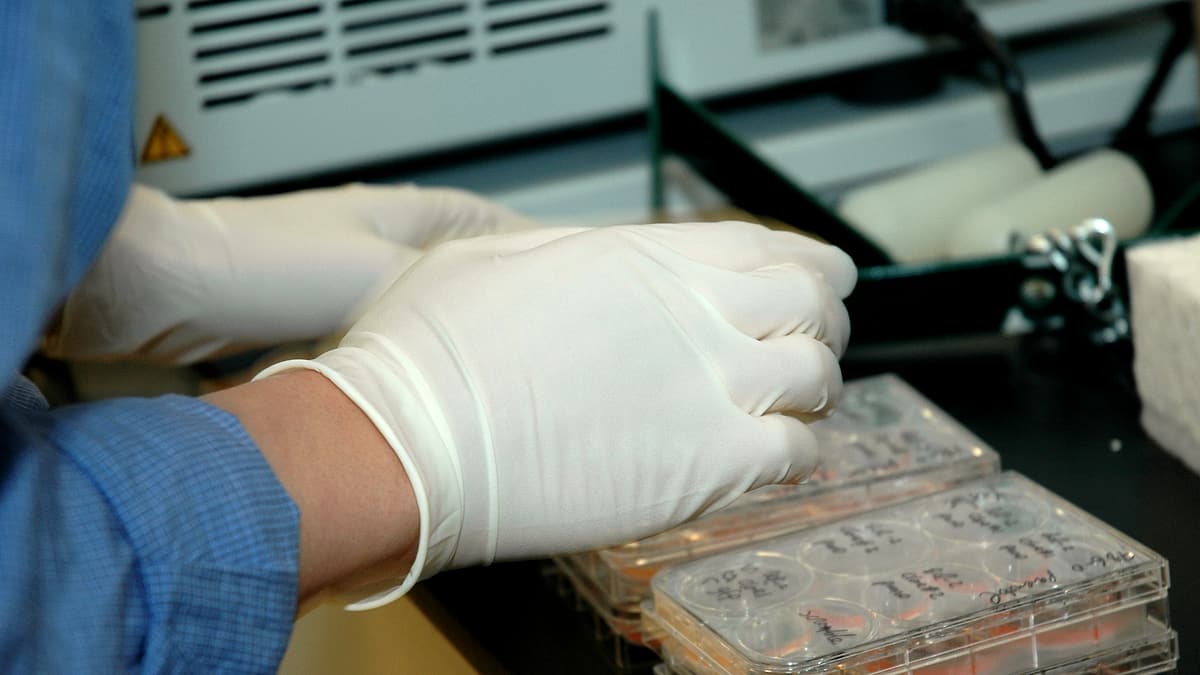
The rule in short
Touch samples contain very little material, and modern chemistry can type it. People shed at markedly different rates, DNA moves between hands, objects and surfaces without direct contact, and frequently handled items carry background from many people. Contamination can also enter at collection, packaging or in the laboratory. A sub-source statistic addresses whose DNA is present and supplies no information about the activity that placed it there.
Touch DNA is a description of the sample rather than of a method. It refers to the residue left when skin contacts a surface: a small number of cells, sometimes fragments rather than whole cells, in amounts that older chemistry could not type. Current kits can. The gain in sensitivity brought with it a question the technique cannot answer, which is how the material reached the place it was found.
How little material now suffices
Amplification chemistry has been pushed to recover profiles from quantities far below what a visible stain contains. The NIST scientific foundation review notes that increased sensitivity produces profiles from very few cells, and the consequence follows directly: a swab that once returned nothing now returns something, and the something may have nothing to do with the event under investigation.
People also differ in how much they leave behind. Some deposit abundant material on brief contact and others deposit almost none, and the same person varies with recent handwashing, skin condition and what was handled beforehand. The difference is large enough that the strongest component of a touch sample is not reliably the last person to hold the object, and it is not reliably a person who held it at all. That variation is one reason a minor component in a mixture cannot be ranked by contact, a limitation that compounds the interpretation problems described in mixture interpretation and its limits.
Routes material takes to an item
Primary transfer is the direct case: a person touches an object and leaves cells on it. Secondary transfer is one step removed. Two people shake hands and one then handles an object, or a person touches a surface another person touched, and material moves without the depositor ever contacting the item. Tertiary transfer adds a further step, and experimental work has recorded profiles surviving through more than one intermediate.
Objects act as carriers. A tool, a garment, a bag, a phone, a door handle in shared use, a car seat: each collects material from everyone who handles it and passes some of that material on. Laundry mixes profiles across garments. A surface that many people touch accumulates a background of profiles that were there before anything happened, and swabbing such a surface samples the accumulation rather than the last contact.
Persistence sets how long any of this remains. Material on a rarely cleaned indoor surface can survive for a long time, material on a handled surface is progressively removed and replaced, and exposure to water, heat and sunlight degrades it. The combined effect is that presence establishes that cells from a person reached the item at some point by some route, and no more than that.
Negative controls run alongside the case sample catch reagent and process contamination present at that moment. They do not detect material transferred onto the item before it reached the laboratory, and they do not detect an event confined to one tube. Elimination databases catch only the people enrolled in them. Both are worth checking, and neither converts an unexplained minor component into a demonstrated contributor.
Contamination inside the process
Handling introduces its own pathways. Items collected without changed gloves, packaged together, examined on a shared bench, or opened in sequence in the same room can exchange material. Reference samples processed near evidence samples create a particular risk, since a reference is abundant and an evidence sample is not. Consumables carry trace material from manufacture, which is why single-use tubes and swabs, and in some laboratories certified low-DNA consumables, are standard.
The defenses are procedural and documented. Negative and reagent blank controls run with each batch. Separation of areas for evidence examination, amplification and reference processing. Staff elimination profiles, sometimes extended to crime scene personnel. Records of who opened an item, in what order, and where. Accreditation and external audits are required of laboratories contributing to the national index under 34 U.S.C. § 12592, and grant conditions under 34 U.S.C. § 10562 require an independent external process for investigating allegations of serious negligence or misconduct affecting forensic results. What those regimes examine is set out in crime laboratory accreditation and audits.
Sub-source and activity questions
The NIST review draws a line that reporting language often blurs. A sub-source question asks whose DNA is in the sample. An activity-level question asks what conduct put it there. The typing and the statistic address the first. They contain no information bearing on the second, because the profile of a cell is identical whether the cell arrived by a handshake or by an assault.
Answering an activity-level question requires different data: experimental studies of transfer and persistence for the specific surfaces, contact types and conditions in the case, plus a pair of stated activity propositions to compare. Some laboratories decline such questions entirely, some report them with heavy qualification, and the available transfer studies are narrow relative to the range of real situations. Where a report gives only a sub-source figure, that figure has not been shown to bear on how the material arrived, whatever the surrounding argument may suggest.
| Level of question | What it asks | What the laboratory can support | What it requires beyond the profile |
|---|---|---|---|
| Sub-source | Whose DNA is present in the sample | A comparison and a statistic under stated propositions | Nothing beyond the typing and population data |
| Source | What kind of cells the DNA came from | Limited support, from separate presumptive or confirmatory tests | Body fluid testing, which touch samples rarely receive |
| Timing | When the material was deposited | No accepted method | Dating data that does not exist for trace deposits |
| Activity | What conduct placed the material there | Only with transfer and persistence data matched to the case | Stated activity propositions and applicable experimental studies |
| Offense | Whether the person committed the charged act | Nothing; it is outside the discipline | The whole of the case record |
What the collection record shows
The documents describing how an item was taken and stored do more work in a touch case than in a case with a visible stain. The collection notes state what was swabbed and how much of the surface, whether the whole handle or one area, whether the swab was moistened, and whether adjacent surfaces were sampled separately or together. A single swab over a large area pools whatever was there and guarantees a mixture; separate swabs preserve the distinction.
Packaging and storage records show whether the item was dried, sealed, and kept apart from references and from other items. Laboratory notes show the order of examination, the bench used, the controls run with the batch, and the quantitation result, which indicates how much DNA was present before amplification. Where quantitation shows a very small amount, the interpretation sits in the region where a figure derived by probabilistic genotyping software depends most heavily on assumptions.
None of this is about whether the profile was read correctly. A laboratory can type a sample accurately, calculate the statistic correctly, and report a figure that is right about the profile, while the item's history leaves the route entirely open. Keeping the two apart is the point: what a DNA statistic states is a claim about a profile, and the record of collection is where any claim about conduct has to find its support.
Points to carry away
- Amplification chemistry now returns profiles from the residue of brief handling, including material from people who never touched the item directly.
- Shedding varies widely between individuals and with recent activity, so the strongest component of a touch sample is not necessarily the last person to hold the object.
- DNA transfers indirectly through hands, shared surfaces and intermediate objects, and can persist on an item long after the depositing contact.
- Frequently handled items carry background profiles that were present before any event under investigation.
- Negative controls, single-use consumables and staff elimination databases are designed to catch contamination introduced during collection or analysis.
- The NIST foundation review separates sub-source questions from activity-level questions, and a sub-source figure answers only the first.
Questions readers ask
Can an analyst tell how long DNA has been on an object?
No accepted method dates a deposit. Persistence depends on the surface, the amount deposited, humidity, handling since, and whether the item was cleaned, and those variables are not recoverable from a swab. Degradation gives a coarse signal that material is old or has been exposed, but it does not convert to elapsed time and it is confounded by storage conditions. A report that describes a profile as recent is describing an inference from the case circumstances rather than a measurement the laboratory performed.
Does a large quantity of DNA show that contact was direct?
Quantity is weak evidence of route. Heavy shedders leave more material by brief contact than light shedders leave by prolonged contact, an intermediate object can carry a substantial deposit onto a surface in one movement, and material already present can be redistributed by later handling. Experimental work reports indirect transfers that yield major components and direct contacts that yield almost nothing. Quantity is one observation among several, and it supports a conclusion about activity only alongside case-specific data about the surfaces and the handling involved.
What is an elimination database and what does it miss?
It holds reference profiles from laboratory staff, and often from crime scene personnel and manufacturing workers, so that a profile appearing where it should not can be identified as contamination rather than treated as a contributor. It catches only those enrolled. Officers, medical staff, custodians and anyone else who handled an item without being sampled remain invisible to it, and an unexplained minor component that matches no one in the database has not been shown to be a genuine contributor. Enrollment scope is a documented policy worth reading.
Sources
- NIST — DNA Mixture Interpretation: A NIST Scientific Foundation ReviewNotes that increased sensitivity produces profiles from very few cells and separates sub-source reliability issues from activity-level questions.
- NIST — Scientific Foundation ReviewsExplains the purpose of a foundation review and the disciplines examined, including DNA mixture interpretation.
- National Institute of Justice — DNA Evidence: Basics of AnalyzingDescribes the analytical steps applied to a sample and the marker systems used when material is limited or degraded.
- 34 U.S.C. § 12592 — DNA identification indexRequires quality assurance standards, accreditation and periodic external audits of laboratories contributing to the national index.
- 34 U.S.C. § 10562 — Coverdell grant certificationsConditions grant funds on accreditation and on an independent external process for investigating allegations of serious negligence or misconduct affecting forensic results.
- National Academies — Strengthening Forensic Science in the United States: A Path ForwardPresses the disciplines toward enforceable standards and toward stating the limits of what a result supports.
Premier Defense Law is a publication, not a law firm. This article states general rules and cites its sources; it is not advice about any particular case, and the law differs by state and changes over time.
More in Forensic Evidence
Fingerprint Comparison and the ACE-V Method
A latent print comparison runs through analysis, comparison, evaluation and verification. Sufficiency at the analysis stage is the examiner's judgment and is not fixed by any national minimum point count. An automated search returns ranked candidates rather than conclusions. Verification may or may not be blind. Black box testing measures the accuracy of conclusions without examining how they were reached, and a reported error rate describes study participants, not a single comparison.
Retaining a Defense Expert and Paying for One
Section 3006A(e) authorizes investigative, expert and other services necessary for adequate representation where the person is financially unable to obtain them. The application may be made ex parte and heard ex parte, so the request does not disclose the theory of the defense. Compensation is capped at an amount the court may exceed on certification approved by the chief judge of the circuit. Rule 706 supplies a court-appointed route, and Rule 16 governs disclosure once the expert testifies.
Firearms and Toolmark Identification
Firearms examination compares class, subclass and individual characteristics on fired components under a comparison microscope. The identification threshold is agreement judged sufficient by the examiner, not a fixed count of matching striae. Subclass carryover from consecutively produced tooling can imitate individual agreement. Correlation databases return ranked candidates, and conclusion wording has moved away from claims of identification to the exclusion of every other firearm.