The Reliability Showing a Forensic Expert Must Survive
Rule 702 is not a formality a well-known discipline clears by reputation. Its amended text puts the burden on the proponent, sets it at a preponderance, and separates the question whether a method works from the question whether it was worked correctly in the case at hand.
The rule in short
Federal Rule of Evidence 702 admits forensic opinion only where the proponent demonstrates to the court, more likely than not, that the knowledge will help the fact-finder, that the opinion rests on sufficient facts or data, that it is the product of reliable principles and methods, and that it reflects a reliable application of those methods to the facts. The factors are flexible, general acceptance alone is not enough, and the record comes from validation studies and the case file.
A forensic result reaches a jury only after the court decides two separate things: that the method behind it is reliable, and that it was reliably applied to this sample by this analyst. Federal Rule of Evidence 702 states the test. Its amended text settles two questions that had been read loosely for years — who carries the burden of the showing, and what standard of proof that burden is measured by.
What the proponent must demonstrate
The rule allows a witness qualified by knowledge, skill, experience, training or education to give opinion testimony only if the proponent demonstrates to the court that it is more likely than not that four things hold. The specialized knowledge will help the trier of fact understand the evidence or determine a fact in issue. The testimony rests on sufficient facts or data. It is the product of reliable principles and methods. And the opinion reflects a reliable application of those principles and methods to the facts of the case.
Two features of that sentence do the real work. The demonstration runs to the court rather than to the jury, so a dispute about whether a technique works is resolved by the judge before any testimony is heard. And the preponderance measure attaches to each requirement separately. A proponent who has established that a discipline rests on sound principles has answered the third requirement and none of the other three.
The requirements bite differently on a comparison discipline and on an instrument discipline. For a pattern method, sufficiency of facts or data is a question about the questioned mark: how much detail the impression carries, how many contributors a mixture holds, whether the surface bearing the toolmark was distorted or degraded. For an instrument method, the same requirement asks about calibration records, control and blank runs, and whether the sample fell inside the range the instrument is qualified to measure.
The factors when a method has no published error rate
The gatekeeping factors are familiar. Whether the technique can be and has been tested. Whether it has been subjected to peer review and publication. Its known or potential rate of error. The existence and maintenance of standards controlling its operation. And general acceptance within the relevant community. The list is neither exclusive nor mandatory, and a court applies whichever factors fit the method in front of it.
The awkward case is a comparison method with no published error rate. The absence of a figure does not end the inquiry. Courts look instead for studies that measured examiner accuracy under conditions resembling casework, for written criteria stating when a conclusion may be reported, for a documented verification step, and for evidence that the laboratory follows the criteria it publishes. Where none of that exists, the third requirement is unanswered however long the discipline has been in routine use.
General acceptance is one factor and is not sufficient standing alone; a community can accept a method it has never tested. The forum matters as well. Several states retain the older general-acceptance test as their admissibility rule, and others apply a reliability rule worded like the federal one but construed independently, so the same technique may face materially different questions depending on where the case sits. That divergence is sharpest for the pattern disciplines examined in latent print comparison.
| Rule 702 requirement | What it asks about a forensic method | Where the answer sits in the record |
|---|---|---|
| (a) Helpfulness | Whether the comparison or measurement tells the fact-finder something it could not work out unaided | The report and the examiner's account of what was compared |
| (b) Sufficient facts or data | Whether the questioned sample carried enough information to support any conclusion at all | Bench notes, images of the impression, instrument output, raw data files |
| (c) Reliable principles and methods | Whether the technique has been tested under casework-like conditions and has stated decision criteria | Published validation literature and the laboratory's own internal validation |
| (d) Reliable application | Whether this analyst followed the procedure on this sample, and recorded any departure | The operating procedure in effect and the complete case file |
A valid method and a reliable application of it
Subsection (d) is the part most often skipped. It asks whether the opinion offered reflects a reliable application of the method to the facts, which is a question about events in a laboratory rather than about a body of literature. A technique can be well founded and still be misapplied: a control that failed and was rerun without explanation, a sample outside the range of conditions the validation studies covered, a comparison documented so thinly that no one can say what features were relied on.
Scientific foundation reviews draw the same line. A review of that kind identifies the scientific foundations underpinning a method and evaluates the empirical evidence for its reliability, which speaks to the method as a class. It says nothing about whether a particular examination was competently performed. The National Academies report on strengthening forensic science made the parallel point at the system level, finding that the disciplines lacked the resources, policies and national support needed to make results dependable across laboratories.
Validation results therefore do not transfer automatically. A study run on pristine test impressions supports conclusions about pristine test impressions. Whether it supports a conclusion drawn from a partial, distorted mark on a textured surface is a separate question the proponent has to answer rather than assume, and the same gap opens between a validated model and the scope of testing a laboratory is accredited to perform.
The most common submission in these hearings is a list of the courts that have admitted the discipline before. That material speaks to general acceptance, which is one factor among several, and it says nothing about sufficiency of data or about application in the case at hand. A court that adopts an admissibility history as its finding has answered a question the rule does not ask.
When a valid method is described in terms the studies do not support
Admissibility is not only a question about the method. It is also a question about the words used to report the result. A technique with real empirical support can be described in court in language the underlying data cannot carry: a conclusion of identification stated as being to the exclusion of all other sources, a claim that the technique has no error rate, a statement of absolute scientific certainty, or a numerical weight of evidence offered without saying what model produced it.
Overstatement survives a favorable ruling on the method, which is what makes it a distinct problem. Courts addressing it have admitted the opinion while limiting the terms in which the conclusion may be expressed, required that a stated level of confidence be tied to a source, or excluded a categorical formulation while permitting a description of the observed similarities. Report language and testimony are examined together, since the two frequently differ.
The documents a hearing is built on
Four bodies of material make up the record. The published validation literature for the method. The laboratory's internal validation, showing that the method performs as claimed on its own instruments, with its own reagents and its own analysts. The standard operating procedure in force when the work was done, which supplies the criteria against which application is measured. And the case file: bench notes, worksheets, images, instrument logs, raw data, review and verification records, and any non-conformance memorandum.
The disclosure required in a federal criminal case is where much of this surfaces first. Rule 16 requires a complete statement of the opinions, the bases and reasons for them, the witness's qualifications including a list of publications from the preceding ten years, a list of cases in which the witness testified during the previous four years, and the expert's approval and signature. A disclosure that states a conclusion without the bases has not met the rule, and it also leaves the court without the material subsection (d) requires.
An opponent assembling the other side of the record works from the same documents plus the independent literature and, frequently, an examiner of its own. Obtaining one in a federal case runs through the application for expert services and its funding, and the resulting dispute is resolved in a pretrial evidentiary hearing where the court states its findings on the record.
Points to carry away
- The amended rule states that the proponent must demonstrate each requirement to the court, and that the measure is a preponderance.
- Subsection (d) asks whether the opinion reflects a reliable application of the method to the facts of this case, not only whether the method is sound in the abstract.
- The reliability factors are flexible and non-exclusive, and general acceptance is one factor that does not carry the showing by itself.
- Several states retain the older general-acceptance test, so the question a method faces depends on the forum hearing it.
- A valid method can still be overstated in court when a conclusion is described in terms the underlying studies do not support.
- The hearing record is built from validation studies, the laboratory's internal validation, the operating procedure in effect and the case file.
Questions readers ask
Is a hearing required before a forensic examiner testifies?
No. The rule tells a court what it must find, not how it must find it. Many courts resolve the question on the disclosure, the report and written submissions, holding a hearing only where a genuine dispute about the method or its application cannot be resolved on paper. Others take testimony from the examiner outside the presence of the jury. A court that rules without a hearing still has to make the findings the rule requires, and a proponent who supplies nothing beyond a curriculum vitae has given the court very little to make them on.
Does an examiner's long experience satisfy the reliability requirement?
Experience is one of the listed routes to qualification, alongside knowledge, skill, training and education. Qualification and reliability are different questions. A witness may be plainly qualified and the method still unsupported, because the third and fourth requirements ask about the technique and its application rather than about the person. Where an opinion rests principally on experience, courts generally look for an explanation of how the experience leads to the conclusion, what it is applied to, and why it is reliably applied here. An assertion that the answer comes from years of practice does not supply that explanation.
What happens when the method is sound but the casework departed from the protocol?
Courts divide. Some treat a departure as going to the weight of the opinion, on the view that the method itself remains reliable and the deviation can be explored on cross-examination. Others read the fourth requirement as an independent condition of admissibility, so that an unexplained departure from the operating procedure means the opinion does not reflect a reliable application and is excluded or narrowed. A third route is partial admission, where the examiner may describe the observations but not the conclusion drawn from them. The available record on what was actually done usually decides which route a court takes.
Sources
- Federal Rule of Evidence 702 — Testimony by Expert WitnessesThe amended text requiring the proponent to demonstrate each of the four requirements to the court by a preponderance.
- Cornell LII, Wex — Daubert standardThe reliability factors, the judge's gatekeeping role, and their relationship to Rule 702.
- United States Courts — Federal Rules of EvidenceThe rules as adopted, downloadable in full, including the committee structure that produced the amendment.
- Federal Rule of Criminal Procedure 16 — Discovery and InspectionExpert disclosure must give a complete statement of opinions, the bases and reasons, qualifications, prior testimony and the expert's signature.
- NIST — Scientific Foundation ReviewsA foundation review identifies the scientific foundations of a method and evaluates the empirical evidence for its reliability.
- National Academies — Strengthening Forensic Science in the United States: A Path ForwardFinds the disciplines lack adequate resources, sound policies and national support, and calls for enforceable standards.
Premier Defense Law is a publication, not a law firm. This article states general rules and cites its sources; it is not advice about any particular case, and the law differs by state and changes over time.
More in Forensic Evidence
Fingerprint Comparison and the ACE-V Method
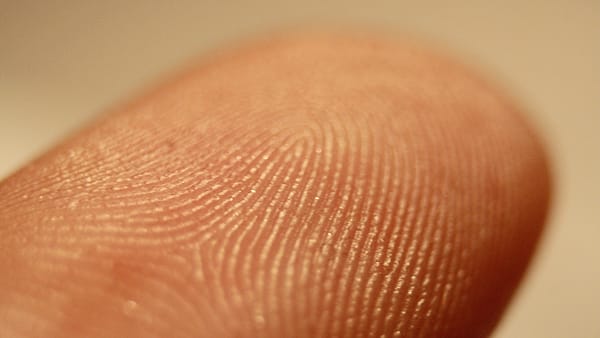
A latent print comparison runs through analysis, comparison, evaluation and verification. Sufficiency at the analysis stage is the examiner's judgment and is not fixed by any national minimum point count. An automated search returns ranked candidates rather than conclusions. Verification may or may not be blind. Black box testing measures the accuracy of conclusions without examining how they were reached, and a reported error rate describes study participants, not a single comparison.

Retaining a Defense Expert and Paying for One
Section 3006A(e) authorizes investigative, expert and other services necessary for adequate representation where the person is financially unable to obtain them. The application may be made ex parte and heard ex parte, so the request does not disclose the theory of the defense. Compensation is capped at an amount the court may exceed on certification approved by the chief judge of the circuit. Rule 706 supplies a court-appointed route, and Rule 16 governs disclosure once the expert testifies.
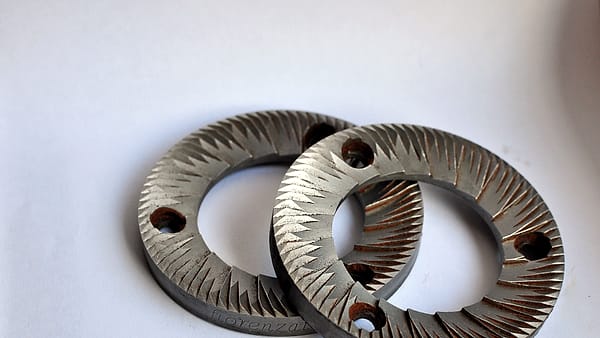
Firearms and Toolmark Identification
Firearms examination compares class, subclass and individual characteristics on fired components under a comparison microscope. The identification threshold is agreement judged sufficient by the examiner, not a fixed count of matching striae. Subclass carryover from consecutively produced tooling can imitate individual agreement. Correlation databases return ranked candidates, and conclusion wording has moved away from claims of identification to the exclusion of every other firearm.