Diminished Capacity and the Offenses It Can Reach
Diminished capacity is not a defense and does not reduce responsibility. It is an argument that the government failed to prove a mental element, which means it reaches only offenses that have a mental element capable of failing.

The rule in short
Evidence of a mental condition offered to show that the defendant did not form a required mental state operates as a failure of proof rather than as an excuse. It reaches offenses requiring premeditation, purpose, knowledge or a specific intent, and does nothing against general intent or strict liability offenses. Federal practice requires notice, and an expert may not state an opinion on whether the mental state existed.
Diminished capacity is a misleading name for an argument that is narrow and technical. It does not assert an excuse, does not reduce culpability as a matter of mercy, and does not ask the fact-finder to be lenient. It asserts that the government did not prove something it was required to prove. That framing determines everything else about how the evidence works and where it fails.
A failure of proof, not a defense
An affirmative defense concedes the elements and offers a reason the conduct should not result in liability. Insanity works that way in the federal system, which is why the burden is placed on the defendant. Evidence of a mental condition offered to show that a required mental state was never formed does the opposite: it contests an element, so the government's burden of proof beyond a reasonable doubt is unaffected and no burden shifts.
Federal law makes the distinction structurally. Section 17 of title 18 states the insanity formulation and then provides that mental disease or defect does not otherwise constitute a defense. Read alongside the requirement that the government prove every element, the sentence closes the door on mental condition as an excuse while leaving open its use as evidence about what the defendant actually thought. Courts have generally read it that way, though the boundary is policed carefully to prevent the excluded defense from returning under a different label.
The specific intent limitation
The evidence can only reach an element that the condition could plausibly have prevented. Offenses requiring premeditation and deliberation, a purpose to achieve a particular result, knowledge of a specific fact, or an intent to defraud all contain a mental element capable of failing. A defendant whose disorder made planning impossible has an argument against premeditation. A defendant whose delusion made him believe the property was his own has an argument against an intent to steal.
General intent offenses supply nothing to aim at. Where the offense requires only that the defendant intended the physical act, a defendant who deliberately performed the act formed that intent, and the disorder that produced the reason for acting is irrelevant to the element. Strict liability offenses have no mental element at all. This is why the doctrine disappoints so often: the most severely disordered defendants frequently intended their physical actions completely, and the element the evidence would negate does not exist in the charged offense.
| Element | Reachable | What the evidence must show |
|---|---|---|
| Premeditation and deliberation | Yes | The condition prevented the reflection the element requires |
| Purpose to cause a specific result | Yes | The defendant did not act to bring that result about |
| Knowledge of a particular fact | Yes | The condition prevented the defendant from registering the fact |
| Intent to defraud | Yes | The defendant believed the representations were true |
| General intent to do the act | No | Nothing; the act was intended even if the reasoning was disordered |
| Strict liability | No | No mental element exists to negate |
Success usually produces a conviction on a lesser offense rather than an acquittal. Defeating premeditation leaves the lesser homicide charge intact. Defeating an intent to defraud may leave a lesser offense that requires only recklessness. The realistic question is therefore what the count structure permits, not whether the evidence is persuasive in the abstract, and that assessment should be made before the notice is filed rather than after the expert has been retained.
How the evidence is offered
Notice comes first. Federal rules require written notice of an intent to introduce expert evidence relating to a mental disease or defect or any other mental condition bearing on guilt, and the notice triggers the government's right to an examination. Failure to give notice, to submit to an ordered examination or to make the required disclosures permits the court to exclude the defense expert entirely, which makes the notice provision the practical gatekeeper for the whole argument.
The testimony itself is constrained. Federal Rule of Evidence 704 permits an opinion that embraces an ultimate issue as a general matter, then removes mental state from that permission in criminal cases: an expert must not state an opinion about whether the defendant did or did not have a mental state or condition that constitutes an element of the crime charged or of a defense. The examination therefore proceeds by describing the condition, its documented effects, the testing performed and the observations made, and stopping short of the conclusion. Counsel draws the inference in argument.
State practice on admissibility varies more than on any other question in this area. Many states admit the evidence on specific intent elements as a matter of course. A substantial number exclude it altogether, reasoning that mental condition belongs in the insanity inquiry or at sentencing and nowhere else. A few permit it only for enumerated offenses. Because the answer is jurisdictional and not derivable from principle, the local rule has to be confirmed before an expert is engaged.
The mens rea states and the sentencing alternative
In the states that abolished the affirmative defense, this evidence is the whole of what remains. Kansas provides that mental disease or defect is a defense only where it negates the culpable mental state required as an element, and that it is not otherwise a defense. Idaho provides that mental condition is not a defense while preserving expert evidence on a state of mind that is an element. Those provisions convert what is elsewhere a supplementary argument into the only argument, and they do so for defendants whose conditions are often the most severe.
Where the evidence cannot reach an element, it still has a place. Sentencing admits material that the guilt phase excludes, and a documented condition that contributed to the offense bears on the sentence in every system that permits individualized sentencing. Federal practice recognizes a reduced mental capacity ground among the bases for a sentence below the guideline range, and the analysis there resembles the arguments treated under variances and departures. Michigan illustrates a third route, channeling mental illness short of insanity into a verdict of guilty but mentally ill that carries the same sentence with evaluation and treatment attached.
Two neighboring bodies of rules govern how any of this is developed. The examination the notice triggers is subject to the limits described in statements made during an evaluation, and the defense expert is retained and funded under the rules covered in obtaining an independent evaluation. Whether the stronger argument is element-directed or excusatory depends on the formulation of the insanity defense in the jurisdiction, and in most cases the two are pleaded in the alternative.
Points to carry away
- Diminished capacity is a challenge to an element rather than an affirmative defense, so the government retains the burden.
- It reaches offenses requiring premeditation, purpose, knowledge or a specific intent and does not reach general intent offenses.
- Federal law provides that mental disease or defect does not otherwise constitute a defense beyond the insanity formulation.
- Notice of expert evidence of a mental condition bearing on guilt is required, and failure to give it permits exclusion.
- An expert in a federal criminal case may not state an opinion on whether the defendant had the mental state constituting an element.
- Kansas and Idaho permit this evidence as the only route, having abolished the affirmative defense.
Questions readers ask
Is diminished capacity the same as partial responsibility?
No, though the terms are often used interchangeably and some jurisdictions blur them. Partial responsibility reduces a defendant's culpability as a matter of grace, converting one offense into a lesser one because the defendant was less blameworthy. Diminished capacity makes no claim about blameworthiness at all. It asserts that a required element was not proved, which produces either an acquittal on that count or a conviction on a lesser offense that lacks the element. The distinction determines who carries the burden.
Can voluntary intoxication support the argument?
In some jurisdictions and not others, and the rules for intoxication are usually written separately from the rules for mental condition. Where voluntary intoxication evidence is admitted, it is ordinarily confined to specific intent offenses on the same reasoning that limits mental condition evidence. A number of states bar it entirely, including for specific intent, and the Supreme Court has held that a state may do so. Where intoxication interacts with an underlying mental disorder, the two are frequently analyzed together by the expert and separately by the court.
What can the expert actually say?
In a federal criminal case the expert may describe the condition, its typical effects, the results of testing, and what was observed about the defendant, but may not state an opinion on whether the defendant did or did not have the mental state that constitutes an element of the crime or of a defense. That conclusion belongs to the fact-finder. The practical consequence is that direct examination has to build the inference without stating it, and a question phrased to invite the forbidden opinion will draw an objection that is properly sustained.
Sources
- 18 U.S.C. § 17 — Insanity defenseProvides that mental disease or defect does not otherwise constitute a defense, which frames the evidence as element-directed rather than excusatory.
- Federal Rule of Evidence 704 — Opinion on an ultimate issueBars an expert in a criminal case from stating an opinion on whether the defendant had a mental state constituting an element of the offense or a defense.
- Federal Rule of Criminal Procedure 12.2 — Notice of an insanity defense; mental examinationRequires written notice of expert evidence of a mental condition bearing on guilt and permits exclusion where notice is not given.
- Kan. Stat. Ann. § 21-5209 — Defense of lack of mental stateMakes mental disease or defect a defense only where it negates the culpable mental state required as an element.
- Idaho Code § 18-207Bars mental condition as a defense while preserving expert evidence on a state of mind that is an element of the offense.
- Ohio Revised Code § 2901.01 — General provisions definitionsDefines the insanity verdict narrowly, leaving mental condition evidence directed at elements as a separate question.
- Mich. Comp. Laws § 768.36 — Guilty but mentally illIllustrates a jurisdiction that channels mental illness short of insanity into a verdict rather than into an element argument.
Premier Defense Law is a publication, not a law firm. This article states general rules and cites its sources; it is not advice about any particular case, and the law differs by state and changes over time.
More in Competency & Capacity

Statements Made During an Evaluation
Federal Rule of Criminal Procedure 12.2 bars use against the defendant of any statement made during a court-ordered mental examination, of expert testimony based on that statement, and of other fruits of it, except on an issue of mental condition the defense has itself raised. A competency finding is separately inadmissible at trial. A warning is constitutionally required before an examination whose results will be used at sentencing.

Commitment After an Insanity Acquittal
Federal law commits a person found not guilty only by reason of insanity to a suitable facility and requires a hearing within forty days. The acquittee bears the burden of showing that release would not create a substantial risk, by clear and convincing evidence where the offense involved bodily injury or serious property damage and by a preponderance otherwise. States cap the commitment differently and provide for extension on a dangerousness finding.
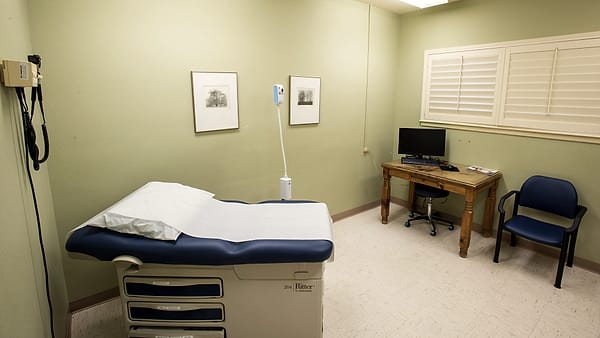
The Competency Evaluation and Who Conducts It
Federal law permits commitment for examination for a reasonable period not exceeding thirty days, extendable by fifteen, and requires the report to state the history and present symptoms, the tests used, the findings and the examiner's opinion on the statutory question. States differ on the number of examiners, their qualifications and where the examination occurs, and New York designates two with a third if they disagree.